

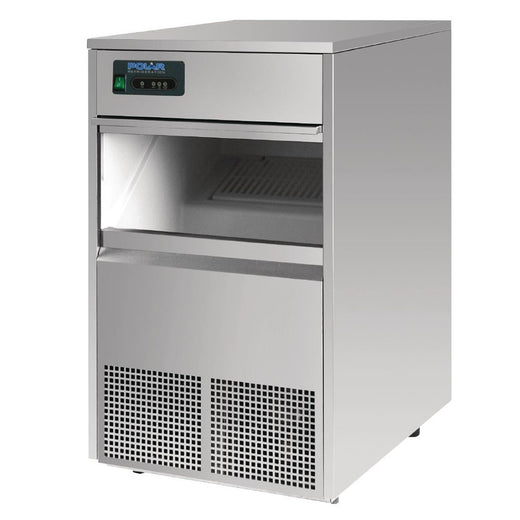
Polar Ice Maker 50kg Output - GK032-A
Sale price
$1,640.80Regular price $2,419.89Save $779.09
$1,446.89$1,591.58 with BLACK2026
Nothing in here yet. Start with our best sellers, or ask our AI assistant what suits your kitchen.
$1,446.89$1,591.58 with BLACK2026

from $173.15$190.46 with BLACK2026

$1,350.42$1,485.46 with BLACK2026

$672.12$739.33 with BLACK2026

Fridges
Freezers
Ice Makers
Cooking
Food Display
Food Prep
Drinks & Coffee
Dishwashers
Stainless Steel
Kitchenware
Furniture

The best commercial coffee machine for a cafe is the one with enough groups and boiler for your busiest hour, on a power supply your shop actually has. A 1 group machine suits a low-volume counter, a 2 group machine is the cafe standard, and a 3 group machine is for two baristas working a queue. In our range, 2 group espresso machines are 500 to 840 mm wide and need anything from a 15 amp outlet to three-phase power, so check the electrical before you choose.
This guide compares the commercial coffee machines we sell by groups, boilers, power and width, using each maker's figures.
Sizes are width x depth x height.
| Model | Groups | Boilers | Power (as listed) | Size (mm) |
|---|---|---|---|---|
| Rancilio Classe 5 USB Tall | 1 | 4 litres | See listing | 410 x 539 x 519 |
| La Marzocco Linea Classic S, 1 group | 1 | Dual: 1.8 litre coffee, 3.5 litre steam | Single phase, 220-240 V | 490 x 585 x 445 |
| Bezzera Otto Compact | 2 | 8 litres | 2,600 W, 15 amp | 500 x 495 x 535 |
| Bezzera Moda DE PID | 2 | Copper-insulated boiler, PID control | 5,500 W, 25 amp | 667 x 505 x 520 |
| La Marzocco Linea Classic S, 2 group | 2 | Dual: 3.4 litre coffee, 7 litre steam | Single phase, 220-240 V | 690 x 585 x 445 |
| La Marzocco Linea PB, 2 group | 2 | Dual: 3.4 litre coffee, 7 litre steam | Single phase, 220-240 V | 750 x 590 x 533 |
| Bezzera Victoria PID | 2 | Multi-boiler | 415 V, 5 kW | 820 x 680 x 560 |
| Rancilio RS1 | 2 | 11 litres | See listing | 840 x 600 x 512 |
| La Marzocco Linea Classic S, 3 group | 3 | Dual: 5 litre coffee, 11 litre steam | Single phase, 220-240 V | 930 x 585 x 445 |
A group is one brewing head: one barista can pull one or two shots from it at a time. More groups mean more coffees under way at once and a bigger steam boiler behind them for milk.
The La Marzocco Linea Classic S shows how the boilers grow with the groups: 1.8 and 3.5 litres on the 1 group, 3.4 and 7 litres on the 2 group, 5 and 11 litres on the 3 group. The maker lists it in 1, 2, 3 or 4 groups.
PID is electronic temperature control. It matters most if you serve lighter roasts or single origins, where a degree either way changes the cup.
This is the step people skip. A standard power point is 10 amp, and no 2 group machine in our table lists one.
Ask your electrician what the counter has before you fall for a machine. Traditional espresso machines also need a water connection and drainage, and a water filter protects the boiler from scale.
If most of your coffee leaves in a takeaway cup, check the clearance under the group. The Rancilio Classe 5 USB Tall takes cups up to 145 mm high and includes a step for espresso cups. The Bezzera Otto Compact takes cups up to 13 cm.
Fitting out a whole counter? Our cafe equipment range covers the rest.
What is the best commercial coffee machine for a small cafe? A 2 group machine that runs on the power you have. In our range the Bezzera Otto Compact is 500 mm wide with an 8 litre boiler on a 15 amp outlet, and the La Marzocco Linea Classic S 2 group is 690 mm wide with dual boilers.
How wide is a 2 group coffee machine? From 500 to 840 mm in our range. Allow extra bench for the grinder, a knock box and room to work.
Do commercial coffee machines need three-phase power? Some do. The Bezzera Victoria PID 2 group lists 415 V. Others run on single phase: the Bezzera Otto Compact lists 15 amp and La Marzocco lists the Linea Classic S and Linea PB as single phase 220-240 V.
Is a 1 group machine enough for a coffee shop? Only for low volume. With one group you can make one or two shots at a time, so a queue builds quickly. Most coffee shops choose 2 groups.
What coffee machine suits a shop that is not a cafe? A fully automatic machine, because it needs no barista. The Rancilio Egro QuBe Pro is listed at up to 120 cups a day.
Sources: each model's groups, boiler sizes, power and dimensions as listed by its maker on our product pages.
Shop the range
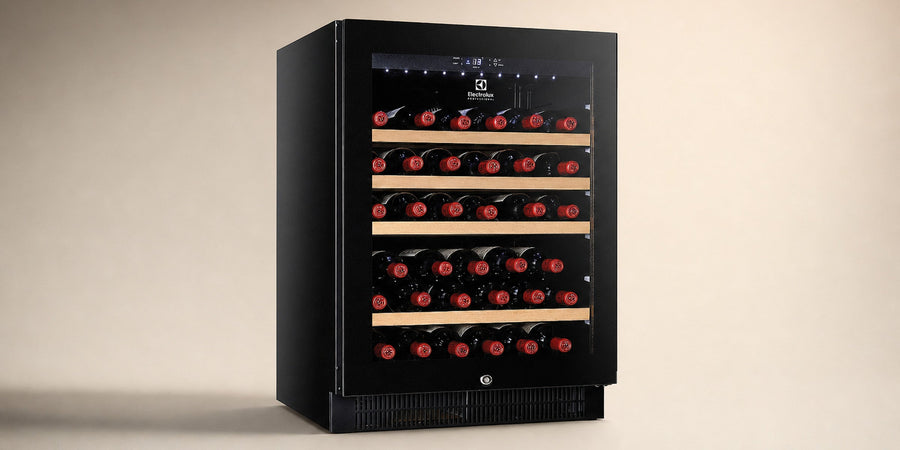
Eight wine fridges from our range compared by bottle count, zones, temperature range and size, with how to choose between under bench, upright and wine cellar...
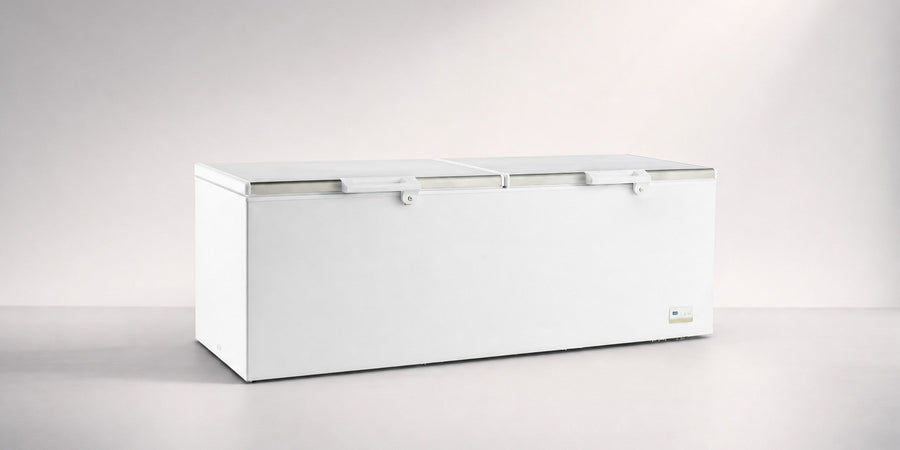
Eight commercial chest freezers from our range compared by litres, width, lid, baskets and the maker's energy figure, plus how glass and solid lids differ in...
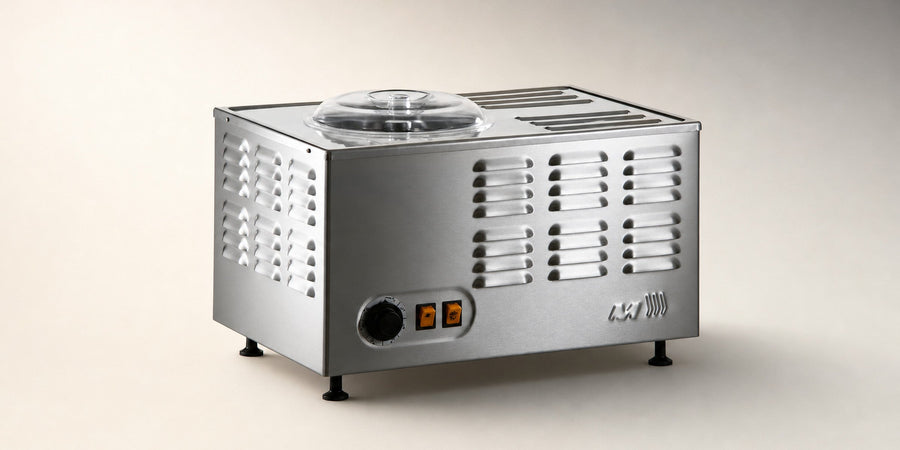
Soft serve machines are sized in serves per hour, batch freezers in kilograms per hour. Two tables from our range show outputs, flavours, power outlets and...























Leave a comment